

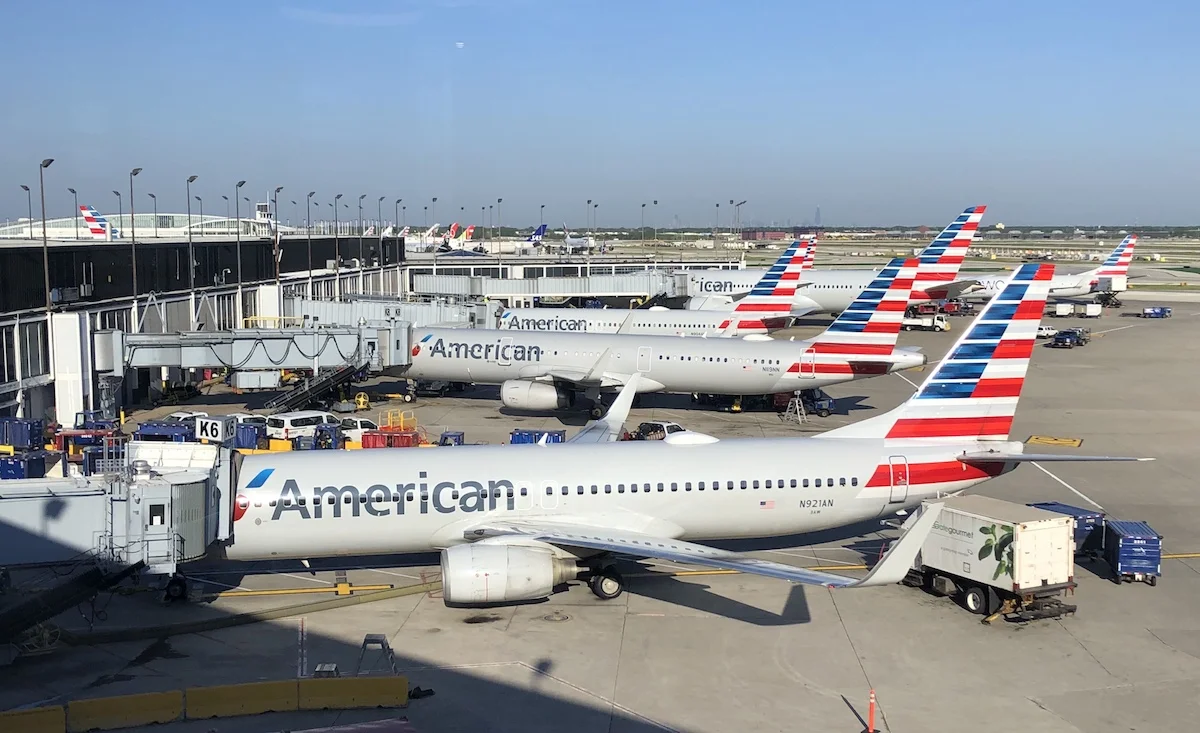
You’re at the gate, watching the jet bridge roll out, and the departure board flickers with one particular airport code you’ve started noticing everywhere: DJT. It hit me the same way it hit a lot of frequent flyers lately — American Airlines is suddenly, publicly, very fond of President Trump. And I’d like to figure out why.
Full disclosure: I’m a skincare blogger who happens to live in a carry-on. I’m not an aviation analyst. But I’ve spent eight years as a beauty buyer shuttling between New York, Paris, and Seoul — 30-plus flights a year — and I’ve seen enough press conferences to know when a company is smiling for a reason.
Airlines have always smiled at power
Let’s be fair first. It’s not unusual for publicly traded airline execs to flatter whoever’s in the White House. It’s literally in their best interest — regulators, airport slots, fuel policy, all of it flows through Washington. You could swap Trump for Biden and the pattern would hold.
So why did this feel different this time? Because the timing is weird.
American CEO Robert Isom has been noticeably warmer toward Trump in recent months — more than during the first 12-16 months of the president’s second term. And the airline’s finances have only gotten worse during that window. The war with Iran has sent fuel bills soaring, with no sign of it easing, and the president’s approval rating is at an all-time low. Praising him, then, is doing American very little in public optics.
A few weeks ago, Isom was at the White House, and I quote him: “From a commercial aviation perspective, the eyes of the world have been on us, and we’ve certainly delivered. Records at American, but records for the industry… no doubt it’s a result of the economy and also the job market. So as we get into the summer, I want to give a shout out to Secretary Duffy. You’ve absolutely chosen the best person possible.”
He closed by asking the administration for help with one thing: the weather. Dude — you’re paying an estimated $7 billion extra for fuel, and the one thing you need a little help with is the weather?
Trump’s response was simple: “we like American.”
The DJT screenshot
Here’s the detail that actually pushed me over the edge. American just announced a new automatic seat feature in its app — a genuinely useful little thing for anyone who hates re-selecting seats. And the screenshot the airline chose to showcase it with shows, of all hundreds of possible airports, DJT. That’s the airport code for Trump’s Florida airport, Mar-a-Lago.
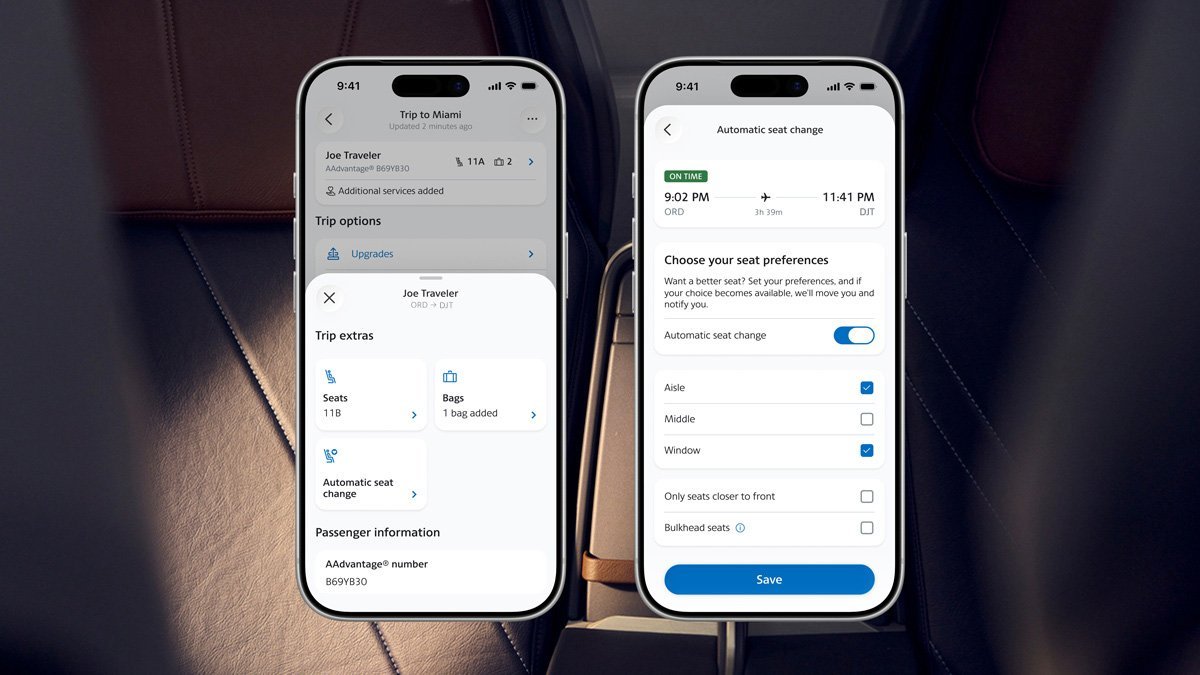
I don’t want to sound like a conspiracy theorist. I doubt Trump reads American’s press releases. But out of every airport in the system, they picked the one named after the president. Subtle? Sure. Coincidence? Maybe. It’s the kind of thing I notice because I live in this ecosystem — every gate, every code, every app screen is my office.
So what’s the motive?
It’s not like airline CEOs are new at this. United CEO Scott Kirby is the clearest example: nothing but good words about Trump, a donation to the inauguration fund, and even a contribution to Sean Duffy’s reality TV show. And it paid off strategically. At first, the theory was that Kirby was courting approval for United’s takeover of JetBlue, a low-cost carrier. Then it got bigger: United wanted to swallow either American or Delta and form one “flag carrier” for the US. Both airlines said no — which, frankly, makes me skeptical that theory was ever realistic.
But American isn’t United, and American management has historically been the no-BS crowd. So what changed?
Two theories make sense to me.
One: the Airbus order. American is planning a wide-body aircraft order, and it’s entirely possible that order lands with Airbus. Trump runs on an “America first” agenda, and buying foreign jets doesn’t fit that story neatly. I’ll admit I struggle to see much leverage the White House would actually have — Delta is taking delivery of new Airbus planes without the same fuss — but it’s the obvious first candidate.
Two: Alaska. The single biggest strategic merger I’ve been expecting in US aviation is Alaska and American. The two networks are almost unnaturally complementary — Alaska owns the West Coast and transpacific, American owns the Midwest, the South, and transatlantic. If American wants that approval, being on the administration’s good side is probably step one. That’s a topic for another day, but it fits the timing.
My honest read? Probably a mix of both, plus the general “Trump likes those who like him” dynamic. The shift is real. Whether it’s strategy or survival instinct is the question the next few months will answer.
The 2-Minute Fix
Next time you’re on American, open the new automatic seat feature in the app and set your default preferences once. Two minutes of tapping now means you never have to fight over seat selection mid-connection again — and if the screenshot’s DJT airport is any hint, the app is at least getting a lot of attention in the right places.
FAQ
Is American Airlines officially partnering with the White House? No — nothing official. It’s a tone shift: warmer public comments, a White House visit, and that DJT screenshot. The company hasn’t announced a deal.
Should frequent flyers be worried about the Alaska merger theory? Not yet. It’s a theory, not a filing. But if Alaska and American ever do merge, transpacific and transatlantic fares and schedules would be worth watching closely.
Does any of this change my loyalty program choice? Not for me. I fly American when it’s the only sensible routing. I’d keep your miles wherever the route wins — that hasn’t changed because of a press release.
So what do you think American’s motive is? I read every comment — tell me if I’m missing the obvious angle.
— Claire Bennett, from a carry-on, somewhere over the Atlantic. Glow doesn’t wait — and neither do you.