
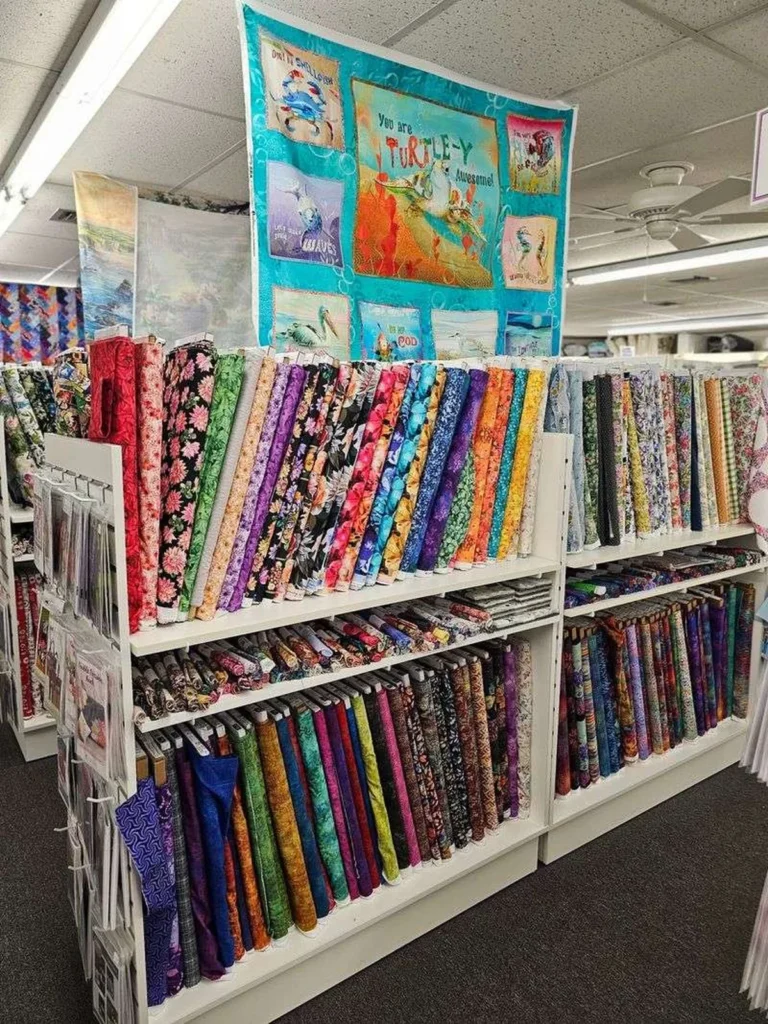
I went in for a spool of thread and walked out two hours later with a bag I could barely carry. That’s the kind of place The Sewing Studio is. It’s a low, plain-looking building on a busy highway in Maitland, Florida, and once you push through the door it opens into rows and rows of cotton bolts, notions, patterns, and sewing machines.
It’s the kind of shop you assume went out of business a decade ago, back when every town had someone who could show you how to thread a bobbin. Bring a project idea, bring patience, and budget more time than you think you’ll need.
A highway storefront that hides a warehouse
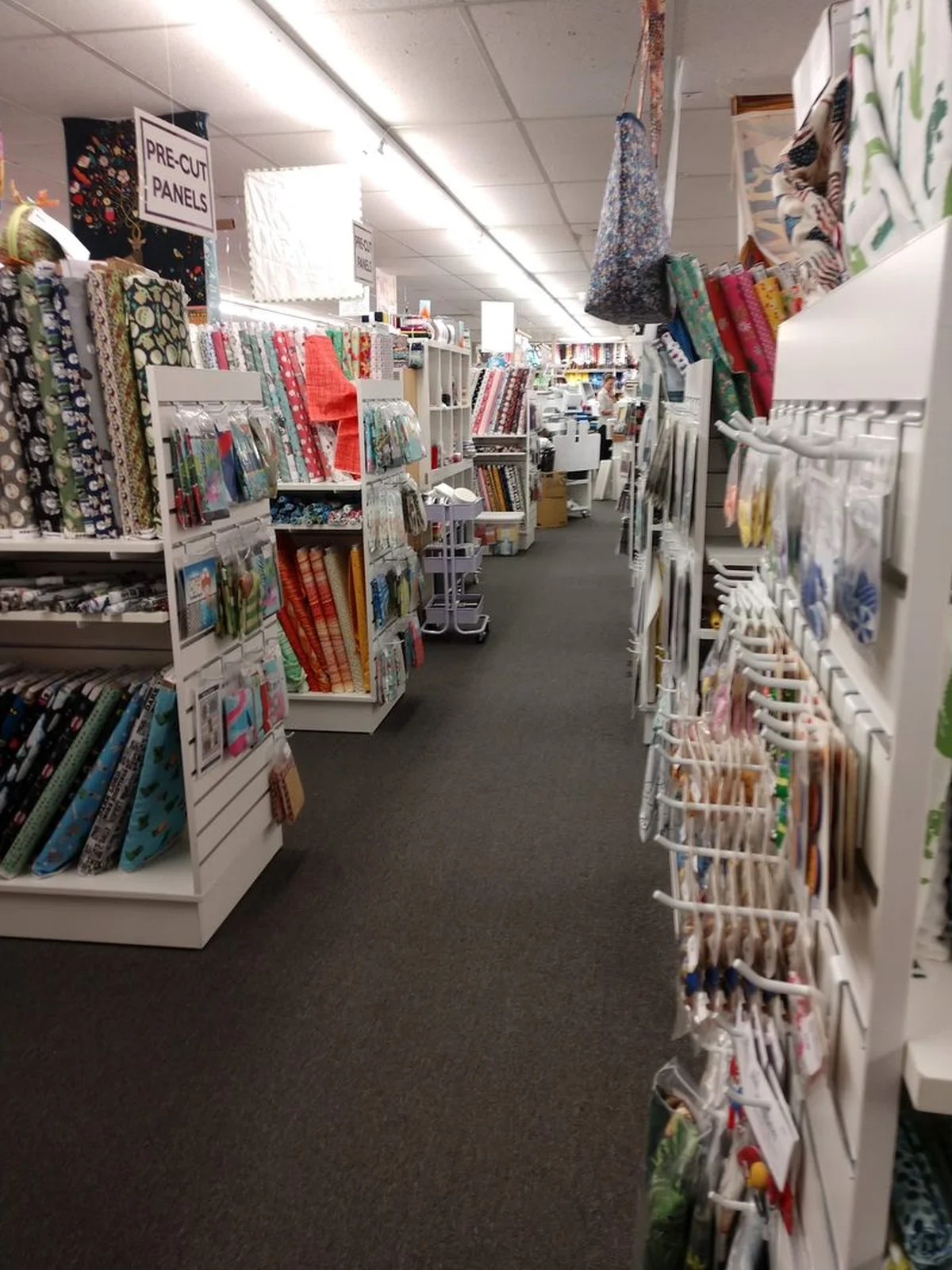
Driving north on US 17-92 through Maitland, the building barely announces itself. Wide parking lot, low roofline, a sign, not much else. Then you’re inside, and the scale changes completely. Fabric is shelved wall to wall, machines sit on display tables, and the aisles run deep with zippers, thread, patterns, templates, and cutting tools. Everything is clean, well lit, and organized, which matters in a store this dense.
On paper it’s a sewing machine store. In practice it’s a fabric destination, a repair shop, and a classroom under one roof, which is why people drive in from well outside the Orlando area. Parking tightens up when classes are running, though there are extra spaces along the side and behind the building. The address is 9605 US-17 #92, Maitland, FL 32751.
Forty-six years, still family-run
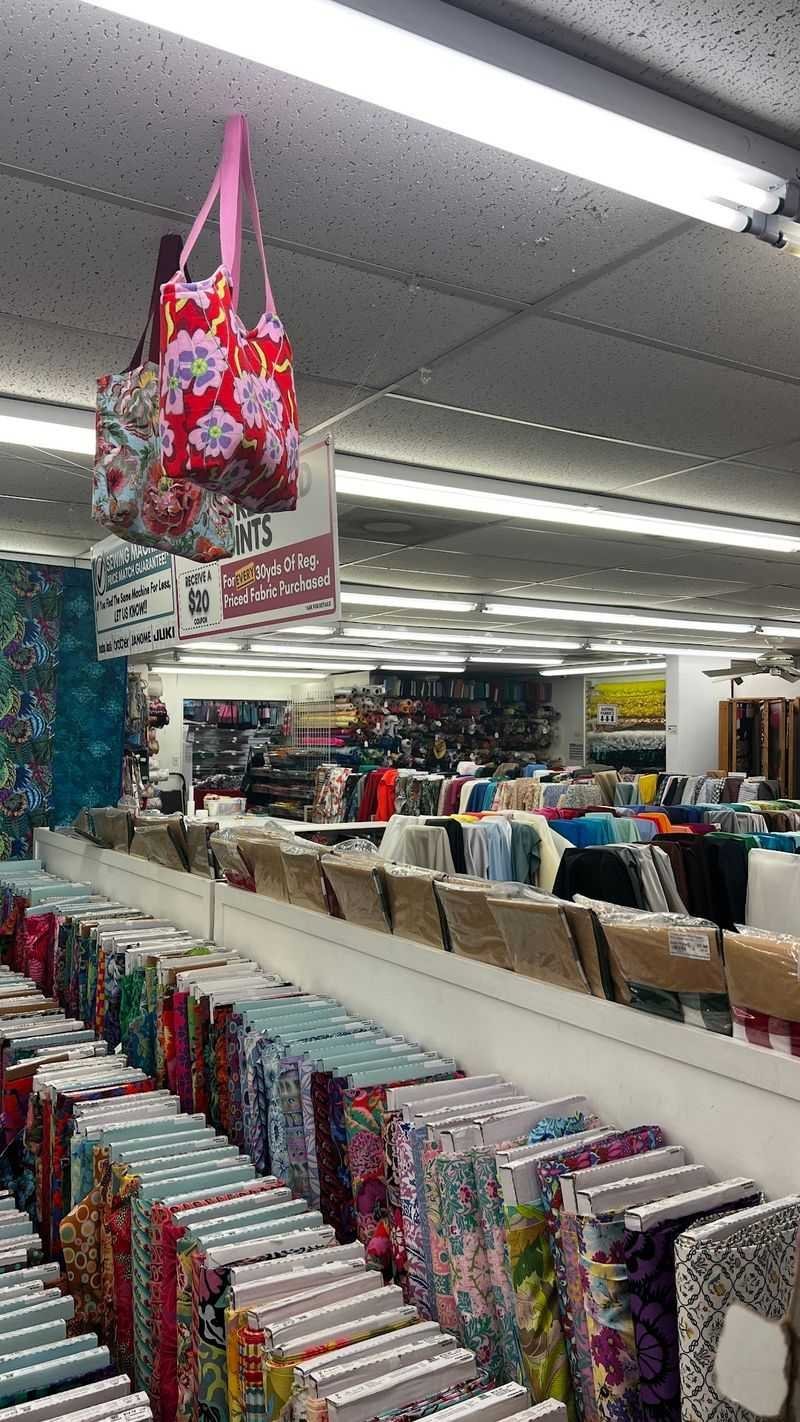
Forty-six years and still running is not a small thing for an independent fabric shop, in an era when most sewing supplies come from a national chain or a shipping box. Longtime shoppers have watched it grow. One has been coming for eight years, buying machines, supplies, and fabric there across that whole stretch. When the JoAnn stores closed, this kind of shop absorbed a lot of that need, and for good reason. Fabric you can touch, hold against a garment, and compare in daylight is hard to replace with a screen.
The staff are sewists themselves, and it shows in how they work. They sit beside you to explain a stitch setting, they recommend fabric like friends, and management replies to reviews personally. If something’s off, you can ask for Eric or Gabriela directly.
Quilting cotton by the aisle
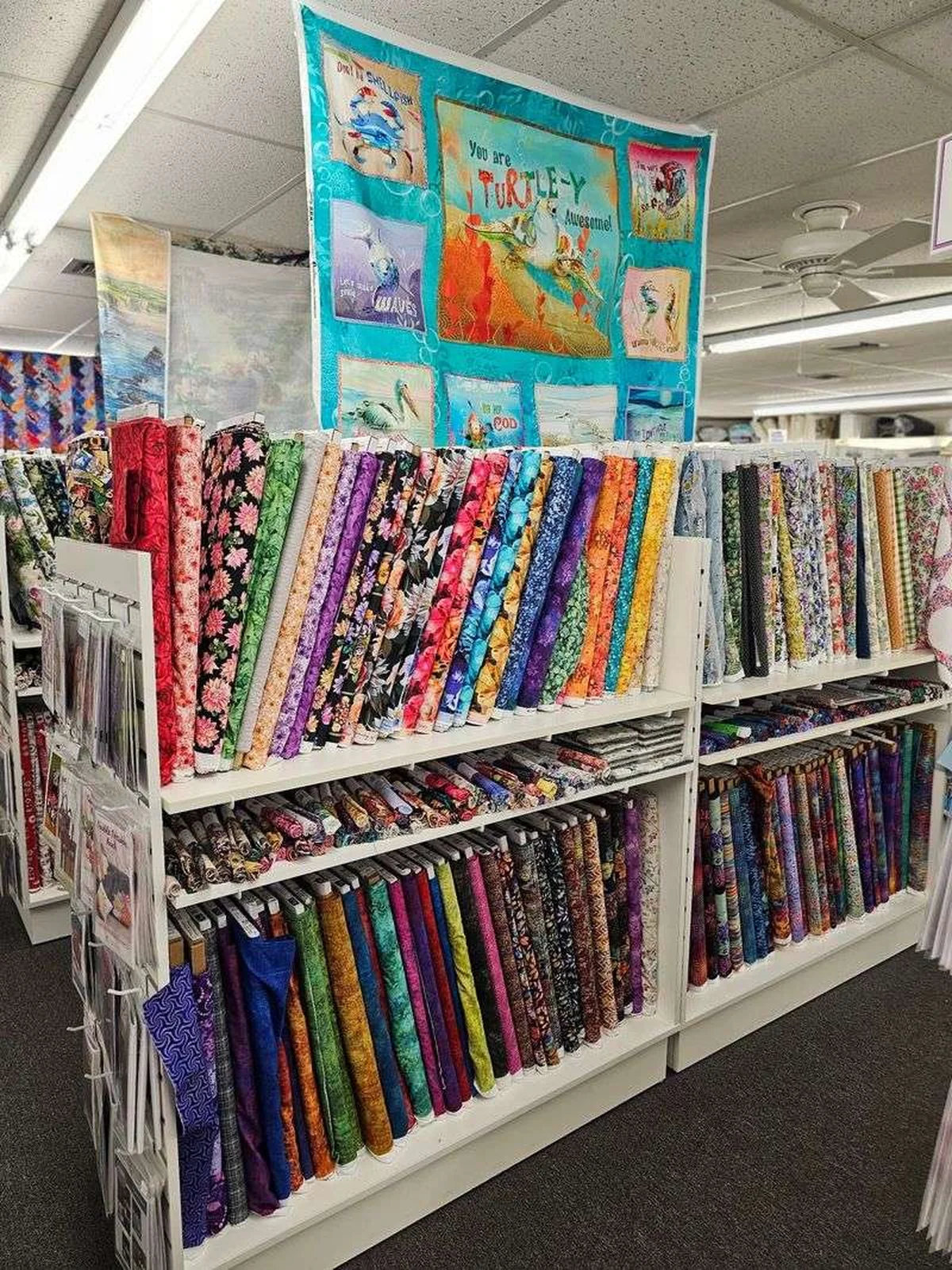
The quilters get the headline here. Cotton bolts stack in color runs that let you build a palette by walking a few feet in either direction, comparing prints side by side instead of guessing from thumbnails. Fresh shipments land regularly, so the wall is never the same twice. You may hunt for one specific print in one month and find an entirely different set of florals, geometrics, and blenders on the next visit. That’s half the fun, and occasionally half the frustration.
Fashion fabric and quilting cotton share the floor, which is unusual. A garment sewist and a quilter can shop the same trip without splitting up across two towns. The discounted remnant section rewards anyone willing to dig, especially for small piecing projects, bag panels, or test blocks where a half yard is plenty. And the cutting service moves briskly. Even on a crowded Saturday, there are enough people on the floor to measure, cut, and answer a question about grain direction.
Notions, buttons, and the stuff nobody else stocks
Stop in for buttons and you may lose an afternoon. The notions section quietly does the most work in the store. Thread in dozens of shades, zippers, needles, marking tools, rotary blades, templates, and interfacing. Patterns have their own space, and Burda magazines sit on the racks too, which is a nice surprise if you draft from European sizing. Craft materials for purses and totes round things out with hardware, stabilizers, and structured bases.
When a project stalls because you need one specific presser foot or one particular weight of fusible, having a shelf of options beats waiting three days for delivery. Satin gets its own following here, too. Costumers and formalwear sewists come specifically for the quality of those bolts. Pricing overall runs wide. Some items sit low, specialty goods climb higher, and holiday sales bring the whole floor down noticeably.
Machines lined up and ready to test
Trying two machines side by side changes a decision fast, and that happens here regularly. Staff walk you through the differences in stitch capability, throat space, and embroidery features before anyone commits. Makes, models, and price points span a broad range, from starter machines to embroidery units and sergers. One shopper came in aiming for a particular model and left with a different one after testing both. That’s exactly how it should go.
Vintage machines are a quieter part of the inventory. The shop keeps a few older models in stock, serviced and ready for a new owner, and someone will sit with you and go through the whole thing before you take it home. Purchase support doesn’t end at the register. Buyers get shown how to operate what they bought, sometimes at a table with the manual open. Machine pricing here tends to run under what competitors ask, which is a deliberate choice for a family business going up against big-box retail.
The repair bench earns its keep
A forty-year-old Pfaff came through the door recently, inherited and mysterious to its new owner. Staff took the time to explain the basics without rushing, then pointed toward classes that would fill in the rest. Service work is a real department, not an afterthought. Technicians handle tune-ups and repairs, including jobs as specific as replacing an inner rotary and threader hook assembly on a Babylock Destiny embroidery machine. Standard servicing runs around $150, which lines up with what a good tune-up costs anywhere.
What people value is that the same shop selling the machine also services it, so nobody bounces between a retailer and an unrelated technician. There are limits. Viking machines aren’t serviced in-house, though the staff will connect you with someone who does, which is a more useful answer than a shrug. Owners of multiple machines routinely bring everything back here rather than take a chance elsewhere.
Classes that fill up before you finish deciding
Registration closes faster than most people expect. The class calendar covers garment construction, quilting, embroidery, and sublimation, and popular sessions book out well ahead, though a waiting list exists for anyone who misses the window. Instruction is the strongest thread running through this whole operation. An Embrilliance software class is led by Fran Brown, who taught in the public school system before bringing that patience to a room of adults relearning digitizing.
Weekly garment classes rebuild habits. One student drives about fifty minutes each way and has corrected years of self-taught shortcuts working with instructor Jane Ann, whose sense of humor keeps a whole table loose. Pattern-specific sessions happen too, like a Melody Dolman from Love Notions that came together in a class taught by Kris at the Villages location. Kids and grandkids are welcome in the lineup, and registration changes can be handled by email, which makes juggling a young sewist’s schedule considerably less stressful.
The 2-Minute Fix
If you’re ever near Maitland and short on time, go on a weekday morning before 11 AM. You’ll have room to browse the cotton wall without crowds, and you’ll get more one-on-one time with the staff. Bring one specific thing you need, a swatch, a pattern envelope, a garment you’re matching, and you’ll be in and out with exactly what you came for. The remnant section is your friend if you’re short on fabric or budget. Half a yard of a beautiful print is often all a test block needs.
Frequently asked questions
Is it worth driving there from outside the Orlando area? For serious sewists, yes. Fifty-minute drives are routine, and shoppers from other parts of the country have made a point of stopping in while traveling through Florida. The combination of a full cotton selection, a repair bench, and a working classroom is rare enough that the drive makes sense.
Can beginners handle the store, or is it all quilters? Beginners are not made to feel out of place. Someone who sews small things occasionally can wander in beside a lifelong quilter, and both get taken seriously. Beginner classes and staff walkthroughs flatten the learning curve considerably.
What are the hours, and when should I go? Doors open at 9 AM Monday through Saturday. Weekday closing is 7 PM, Saturday wraps at 5 PM, and Sunday the store is closed. Weekday mornings give you far more room to browse and more one-on-one time with anyone helping you. Saturdays bring the crowd, and parking fills when classes run, though extra spaces sit to the side and behind the store.
This isn’t a store you visit on the way to something else. It’s the something else. The aisles invite slow browsing, the lighting is soft and even, and nothing about the layout pushes you toward checkout before you are ready. Some describe the feel as cottage-core, which captures the mix of stacked prints, hanging samples, and the sense that creativity happens in this building rather than just commerce. Order is what makes the abundance work. With this much inventory, sloppy shelving would be chaos, and instead everything sits in a logical spot with room to pull a bolt and look at it properly.
Rated 4.7 stars across more than five hundred reviews, the store holds a strong standing without leaning on gimmicks. Nothing here is perfect. Prices vary widely depending on what you’re buying, popular classes disappear fast, and Viking machines go elsewhere for service. But you get bolts you can hold, technicians who know their equipment, teachers who can fix a bad habit you picked up years ago, and a floor staff that remembers what you were working on last time. Go with a project in mind, leave extra time, and expect to walk out with more than you planned. Glow on, even on the move.