
That’s not a trip, that’s a lifestyle. I have 30+ flights a year, and for years my carry-on and my credit card statement were the same story: packed full, slightly embarrassing, and completely unnecessary.
Then my money got tight, and everything started to look different. Not the bank balance first — my perspective. The ‘must-haves’ I’d defended for years suddenly looked like weights I’d been carrying without noticing.
So I stopped collecting and started subtracting. Here’s what actually changed — and I’m keeping it honest, including the parts that took more effort than they sound.
Minimalism is subtraction, not a decor trend
I didn’t start minimalism because it was trendy. I barely knew what it was. It came during a financial crisis that forced me to look closely at how I was actually living — and I found a life full of things I rarely used, and a few relationships that only stayed comfortable while the money was comfortable.
Here’s what I’ve learned: minimalism means living more intentionally with less. It’s not a decluttering project. It’s removing the stuff that doesn’t add value, so what’s left has room to matter — the health, the people, the time, the peace.
There’s a definition I come back to: minimalism is the intentional choice to own and do less so you can experience more of what matters. It only clicked when I took it literally.
The four areas minimalism actually works on
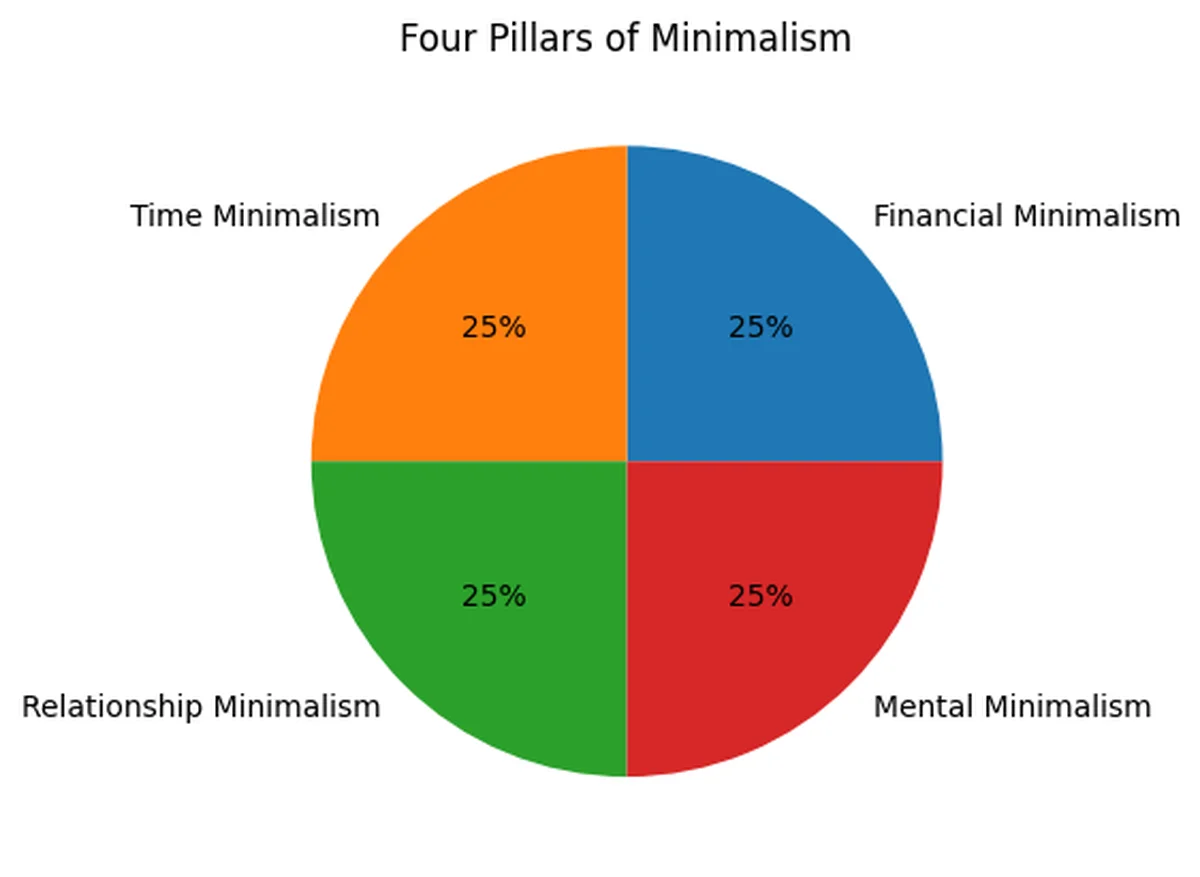
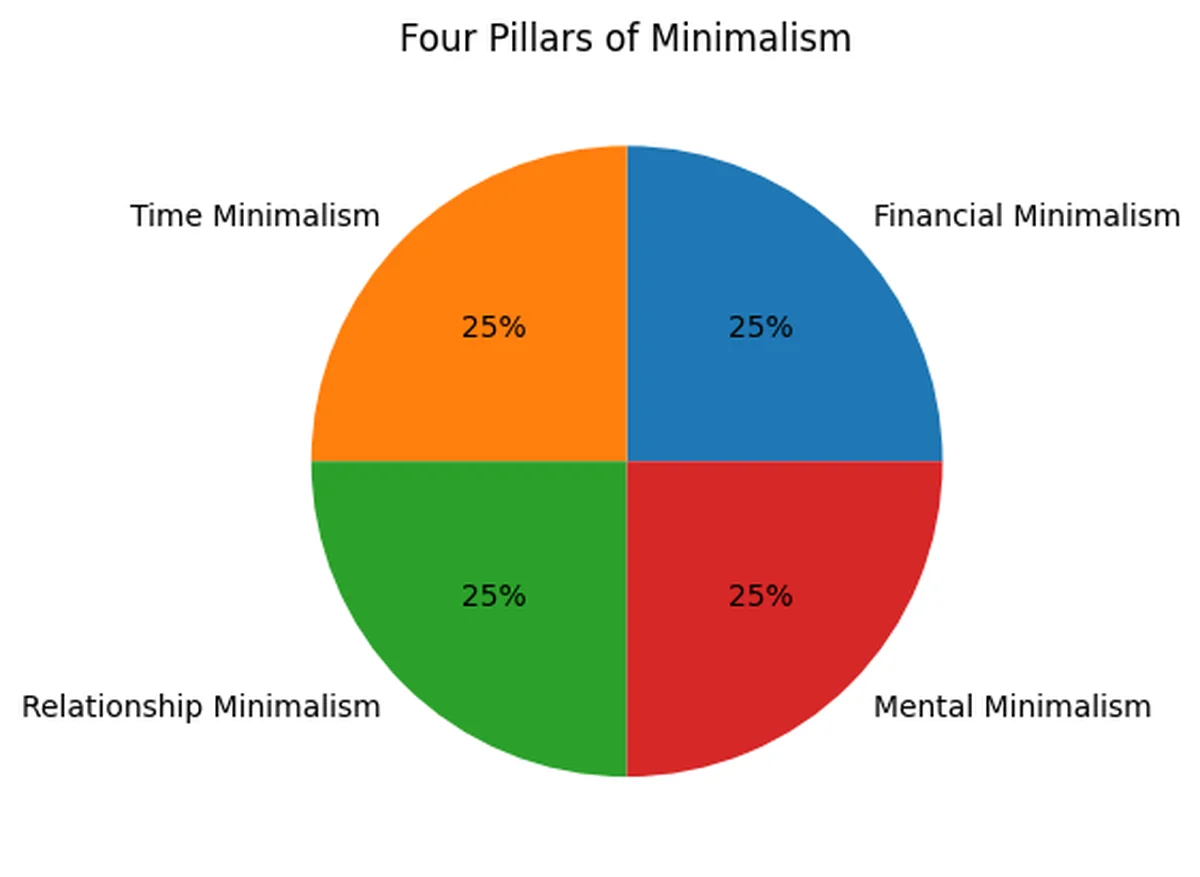
I broke it down into four places where the chaos was loudest: money, time, relationships, and my own head. Financial minimalism is where I did the real work, so that’s where I’ll be specific.
Financial minimalism: the one that hit home
When your account starts shrinking, the ‘luxuries’ fade first. That’s when you realize how many of them weren’t luxuries at all — they were status objects. The expensive phone, the upgrade, the things with logos. We buy them for how they feel at the register, and then live with the reality.
A loud, expensive purchase is quietly a commitment of your future income — month after month. That team-up with payments works on every wallet, and it stacks up: more pressure to keep earning more, a harder time leaving the job you don’t love, fewer real risks you’ll ever take. The story sounds like mine, and I bet it sounds like yours.
The irony is the part that stings: the thing you bought to be happier can become the thing that stresses you out. I’ve stopped being an owner of my stuff and started working to support it — payments, maintenance, the mental tax of ‘do I even use this?’. Now the purchases I do make have to earn their place.
Financial minimalism, in my words: not spending as little as possible — spending on purpose, so the money follows your values instead of pulling you toward more. The question I ask before almost every purchase now: “Is this adding real value, or am I just buying a 10-minute feeling?” That single question quietly rewrote my budget.
How I keep it running
This isn’t a one-time spring clean. It’s maintenance, the way I treat a travel routine:
- Needs vs. wants — “Do I truly need this, or does it just look good in my feed?” pauses a lot of purchases in their tracks.
- Keep spending simple — I’m still carrying five things that didn’t need to be there. Every item I don’t buy is less money, less attention, less mental maintenance.
- Resist lifestyle inflation — when money comes in, spending creeps up to meet it. Not every extra dollar deserves a paycheck. I bank the difference on purpose.
- Pay myself first — savings and investing before the lifestyle does. Freedom compounds; impatience doesn’t.
- Stop comparing — I used to budget against other people’s highlight reels, which is how you end up spending on a life that isn’t yours. I only compare to my own plan now.
My core belief, in one line: the goal isn’t to buy less. It’s to buy only what genuinely makes my life better.
{{wp:details “The 2-Minute Fix”}}Open your bank or card app right now. Pick your three biggest recurring non-essential charges. Next time a payment is due, ask each one: “Can I still not make this?” There’s a strong chance at least one will tell you the answer. Cancel the ones that wouldn’t choose you back. Two minutes, maybe one refund, and your money budget just got a lot lighter.
{{/wp:details}}FAQ
Does financial minimalism mean being frugal?
Not quite. It means spending deliberately. You can still spend comfortably on things you actually value — it just stops being automatic. I stopped spending to keep up, which freed up room for the things that are actually mine.
I keep buying things for status. Does that mean I’m doing it wrong?
No, it means you’re catching it, which is the whole game. I used to too. The fix isn’t guilt — it’s the question: “Is this adding real value, or is it a moment of feeling?” Say it out loud before you check out. Sometimes the answer is already inside the question.
Is minimalism just about money, then?
The money’s where I started, but the money’s not where it lives. If your finances are clean but your calendar, your people, and your feed are running at max, you’ll still feel the weight. So next I’m working on the other three pillars — time, relationships, and keeping my head off the day-by-day. I’ll share that here when it’s ready.
If this sounds like a life you want — less carrying, more space — you’ve already taken the step that matters most.